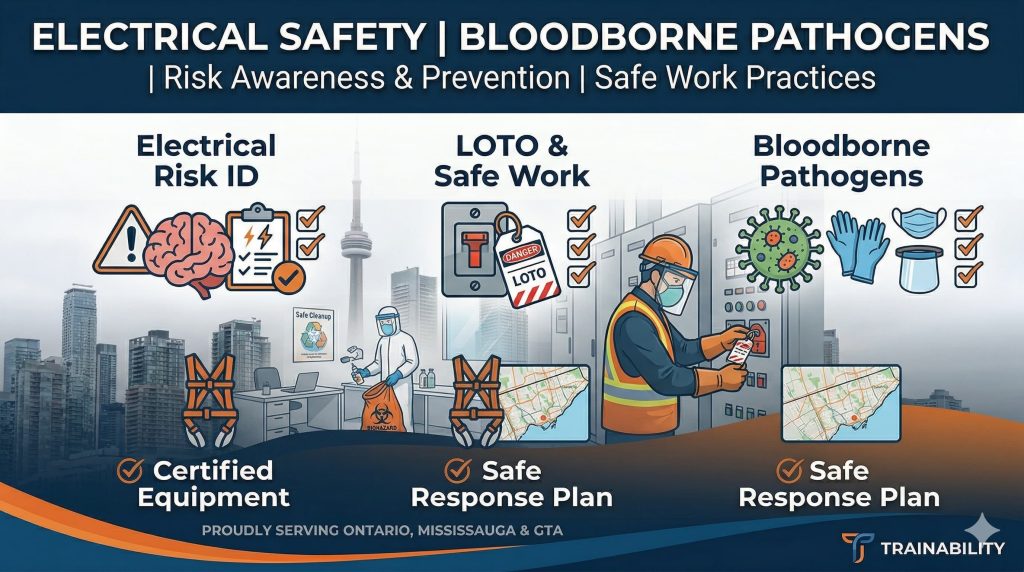
You do not have to be an electrician to encounter dangers associated with electricity at work. According to studies, a damaged extension cord in a warehouse, a broken plug in a lunchroom, or an overloaded power bar under a desk are some of the possible electrical hazards that can cause hospitalization for a worker every year. In fact, most electric injuries have nothing to do with high voltages and special technical skills.
Therefore, everyone in every sphere should pay attention to the electrical safety tips. The electrical safety knowledge will be important for everyone who works with electrical tools or equipment.
In Ontario, employers and employees share legal liability for the identification and management of electrical risks under the OHSA Act. This guide will provide details about various electrical risks and some simple electric safety tips, the people in danger, and the requirements of OHSA.

Common Electrical Hazards in the Workplace
Most electrical hazards in the workplace can be categorized into a few types. The first step in avoiding them is to identify them.
Electrocution and Electrical Shock
Contact with a live wire, broken equipment, or energized surface may allow electricity to pass through the body. Low-voltage shocks can cause burns, muscle damage, or heart problems; high-voltage shocks can be fatal.
Arc Flash and Arc Blast
Arc flash is an instant release of energy due to electrical malfunction that manifests into high heat, light, and pressure. It can happen without any contact with electrical equipment and lead to severe burns, loss of hearing, and injury from the explosion.
Damaged Cords and Plugs
Whether they are damaged insulation, visible wires, or bent prongs, these issues are not simply a bother. They are among the most frequently occurring sources of workplace shock and fire incidents.
Overloaded Circuits and Extension Cords
Using too many devices from one outlet or linking various extension cords together can overheat wiring, which may cause fire, especially in older structures and temporary working establishments.
Contact with Energized Equipment
People performing maintenance, cleaning, or repairs near equipment that hasn’t been de-energized bear one of the greatest electrical threat risks compared with any other type of work.
10 Essential Electrical Safety Tips for Workers
If you work in a warehouse, manufacturing, or office environment, the following electrical safety tips are applicable:
- Inspect electrical equipment prior to use. Prior to each working period, inspect all connections and leads for damage and defects.
- Ensure all cords and outlets are in proper working order. Replace damaged cords instead of using tape for repairs.
- Do not overload outlets. Use multiple outlets to distribute electrical load and avoid plugging in too many tools into one outlet.
- Keep electrical devices away from water. Having wet hands or water on floors near electrical items is dangerous.
- Observe safety distance from energized equipment. Follow all warning signs and barriers around operating machines.
- Use all necessary protective gear. Always wear insulated gloves and suitable clothes.
- Do not disable safety systems. Circuit breakers, GFCIs, and interlocks exist because a hazard was identified; don’t disable them for convenience.
- Follow all lockout/tagout guidelines as needed. Safety remains most important when fixing activities on electrical equipment.
- Report any issues with electric items, disable equipment, and put up a warning sign to prevent accidental use.
- Only qualified workers should perform electrical work. If a task involves opening panels or working on live circuits, it belongs to a licensed electrician, not general staff.
Who Is at Risk of Electrical Hazards?
Electrical risk is not limited to a single job role, as employees who face it in their daily work are:
- Construction workers: This employee encounters wiring, temporary power installations, and outside machinery.
- Maintenance workers: They carry out repair activities with practical jobs around voltage carrying installations.
- Manufacturing employees: They operate machines with electrical components that consume large amounts of energy.
- Warehouse workers: This individual interacts with extension cords, batteries, and other machinery in a warehouse setting.
- Facility personnel: This category includes employees who work with various systems, circuits, and old structures.
- Contractors: People who work for different sites with their unique electrical installations also face electrical risk.
If your role puts you near cords, panels, machinery, or temporary power at any point in your day, you’re part of this list.
Electrical Safety Requirements Workers Should Understand in Ontario
Adherence to electrical safety regulations in Ontario is the legal duty of both employers and workers at workplaces.
- Key duties of employers: Employers, as per OHSA rules, should assess electrical risks, provide adequate training, and take steps to ensure only trained people perform electrical work.
- Person’s responsibilities: Workers must implement safety procedures, wear the necessary PPE, and inform about unsafe acts and situations as soon as possible.
- Differentiating people: Ontario regulations call for differentiating between regular people and “qualified persons” who completed the training and were certified to work on electrical systems.
- Adherence to safe practices: Proper safety procedures applicable to each particular site (lockout/tagout, clothing regulations, inspection) should exist as enforced rules rather than optional instructions.
- Ontario rules for workplace safety: Electrical work should not contradict rules established by the ESA (Electrical Safety Authority of Ontario), Ontario’s regulator for electrical safety, in addition to OHSA’s general workplace duties.
What Should You Do If You Find an Electrical Hazard?
When you encounter an electrical hazard, remember the following points:
- Stop and evaluate the situation. Avoid proceeding further until you are aware of the risks.
- Avoid touching any exposed energized components. Remember that when something is exposed, it will always be energized.
- Keep people safe. It is recommended to alert those who are near you to the danger.
- Report any electrical hazard. Inform the concerned safety person in the organization about the threat.
- Get the right professional to deal with the danger. An electrical hazard should be addressed by a qualified professional technician or electrician.
Why Electrical Safety Awareness Training Matters
Understanding workplace electrical safety and being able to identify danger in practice are two very different things, which is where training makes the difference.
- Hazard recognition: ability to see danger before someone gets hurt.
- Risk reduction: minimize the number of avoidable injuries and near misses.
- Safe work habits: consistent habits take the same safety precautions at work and under pressure.
- Worker skills: knowledge of how to act, not just what the rules are.
- Safety culture: teams that look out for hazards collectively, not just individually
One of the key points of training is that it does not allow ordinary workers to become electricians, but it helps them to identify what is dangerous and what should be avoided.
Electrical Safety Awareness Training in Mississauga
Trainability has developed the Electrical Safety Awareness course for employees across Ontario and also for teams within Mississauga and surrounding areas performing work that requires knowledgeable hazard recognition skills but without the need for specialized electrical training.
Who should attend: Non-electrical workers, maintenance personnel, warehouse staff, and contractors working in proximity to electrical systems but who do not possess electrical qualifications.
Benefits of training: This knowledge makes participants aware of various hazards involved in electrical work, the rules and regulations to follow while conducting such a job, and when to call in a specialist to help achieve compliance with OHSA regulations.
If you are looking for an efficient electric safety course for your personnel, check out the Trainability Electrical Safety Awareness course to find out if this course is appropriate for your workplace.
FAQs
The most common hazards are electrical shock, arc flash, damaged wires, insulation, and circuits, and contact with energized sources.
To stay safe, always give your gear a quick check before using it, plug things in without overloading your outlets, and keep everything completely away from wet or damp spots.
Construction workers are the most exposed because they often deal with electrical equipment, and non-electric workers also face risks.
While the type of training depends on the role, OHSA legislation indicates that employers should ensure that all their employees are trained for their safety.
The equipment has to be withdrawn from use without delay and reported to the supervisor so that it can be repaired or replaced by someone knowledgeable.
Yes. Electrical safety awareness training is intended for people who are not electricians but work near electrical equipment and need to identify the possible hazards but not to make repairs.
Conclusion
Electrical hazards are not only present in specialized fields but also in everyday activities at construction sites, warehouses, and offices. The first step in implementing essential electrical safety measures for workers is to become familiar with these electrical safety tips, to know what Ontario requires, and to know when to call a professional for help. If your company is looking for a systematic approach to developing the required skills, it is advisable to organize electrical safety awareness training.