
In terms of workplace safety, there are both obvious hazards (think slips, trips, and falls) and hidden hazards that could injure someone severely without warning. Two of those hidden hazards are electrical hazards and biological hazards. Both of these hazards pose an extreme risk of injury to employees every day.
For these reasons, Electrical Safety Awareness Training and bloodborne pathogen education are extremely important components of current occupational health & safety awareness & training programmes throughout Ontario.
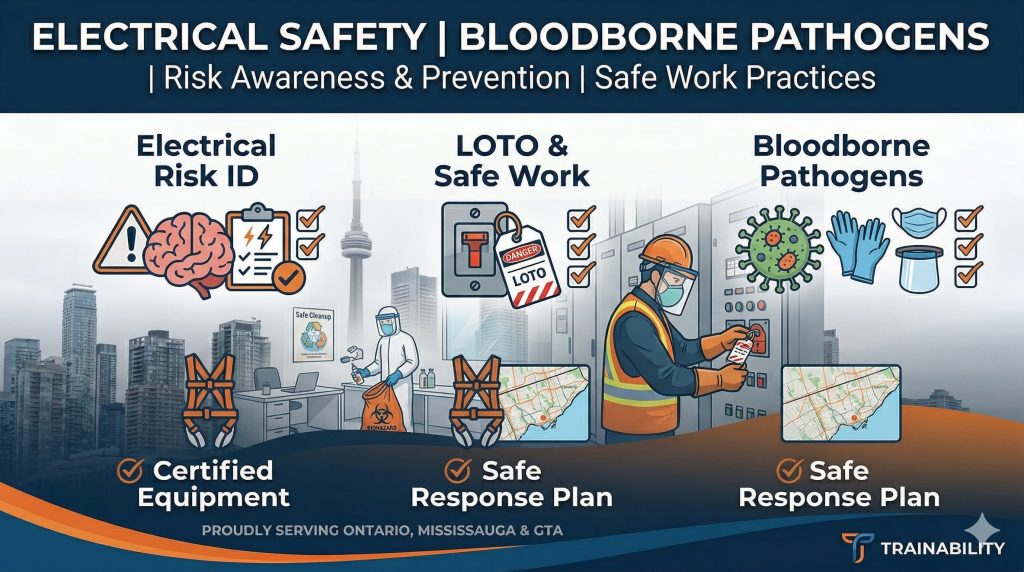
Why Every Employee Needs Electrical Safety Awareness Training
Workplaces around the globe are powered by electricity; however, without appropriate preventative measures, electricity can be a deadly, quiet force.
Key Hazards Covered in Electrical Safety Awareness Training:
Arc Flash Hazards
- A sudden release (explosion) of electrical energy.
- Potentially results in severe burns, blindness, or death.
- Occurs frequently when an electrical circuit is damaged or improperly handled.
Lockout/Tagout (LOTO) Procedures
- Ensure machinery is properly shut off prior to performing maintenance work.
- To prevent accidental re-energisation of equipment.
- Essential in order to keep workers safe, particularly during maintenance work.
Grounding & Electrical Protection
- Reduces the likelihood of shock.
- Protects both workers and equipment from shock hazards.
- Grounding/protection of electrical equipment is critical in industrial and construction areas.
Electrical Safety Awareness training provides employees with the necessary knowledge to identify and understand these hazards and to follow established safe operating procedures all the time.
Bloodborne Pathogens: Keeping Your Workplace Bio-Secure
Biological hazards carry similar risks of injury or harm as physical hazards. Bloodborne pathogens refer to disease-causing organisms, such as hepatitis B and C and HIV, found in the blood of humans.
Key Safety Measures:
Personal protective equipment (PPE)
- Use gloves, masks, and protective clothing
- Prevent direct exposure to contaminated materials.
Safe cleanup procedures
- Using approved disinfectants
- Disposing of biohazardous waste according to policies.
- Avoiding cross-contamination
Exposure Response Protocols
- Washing and decontaminating any exposed areas as soon as possible
- Immediately reporting an incident of exposure
- Seeking an evaluation by a physician.
All employees should be trained on these procedures in order to create a safe and compliant workplace.
Meeting Ontario’s OHS Awareness Standards
Employers in Ontario must provide their workers with occupational health and safety awareness and training as mandated by provincial regulations.
Some of the primary requirements include providing:
- Awareness of the various types of hazards in the workplace
- The rights and responsibilities of the workers
- Emergency procedures
- How to deal with a potentially dangerous situation
Meeting these requirements will help avoid penalties as well as develop a culture of safety within your organisation.
Corporate Training Programs in Ontario
Ontario’s businesses are learning that comprehensive safety training programmes covering both electrical hazards and biological hazards are becoming more commonplace.
Those training providers in Ontario like Trainability offer the following:
- Certified Electrical Safety Awareness Training
- Bloodborne Pathogen Awareness
- On-site and in-class flexible corporate training solutions
- Programs that meet the Ontario health and safety requirements
By using these training products, organisations can prepare their employees to effectively deal with both visible and non-visible risks at work.
Conclusion & Call to Action
The importance of workplace safety isn’t limited to the visible aspects of workplace conditions, such as the hazards of working near live electrical parts or biological agents that are often not visible. Everyone must be aware, prepared, and properly trained to prevent or to reduce the risk of serious accidents due to either electrical hazards or biological agents.
Through Electrical Safety Awareness Training and Occupational Health & Safety Awareness/Training, you can provide a safer, more compliant, and more resilient workforce.
Take the Next Step in Protecting Your Team.
Visit our website for more information on all awareness training courses and find the course that is best for you!
FAQs (Frequently Asked Questions)
This programme educates workers about the potential dangers that exist with electrical equipment, safe practices, and preventive measures.
Any person who has the potential to work near electrical system(s) or electrical equipment(s), no matter what their industry, should receive this training.
Bloodborne pathogens are viruses or bacteria that can exist in human blood and have the ability to cause serious health problems such as hepatitis B and HIV.
Yes, Bloodborne Pathogens training is required to be provided to workers who work in an environment that has the potential to expose them to biological hazards.
Safety awareness training should be refreshed regularly or when there are significant changes to workplace conditions or regulations.
