
One of the primary concerns for industrial job sites is safety when working in confined spaces. Workers often carry out their tasks in an area where they have restricted movement, no or limited airflow, and limited access to entry points. These conditions increase the likelihood of accidents if proper precautions are not taken.
Confined spaces pose a high risk because of limited entry/exit points and airflow and due to the potential presence of hazardous materials. Without appropriate preparation, workers may suffer from lack of oxygen, exposure to toxic fumes, or inability to escape quickly in an emergency.
A structured confined space course has been developed to provide workers with information on the hazards and prepare them to work in a safe and productive manner.
Moreover, confined space training teaches employees hands-on safety skills that allow employees to respond effectively in real-life situations. Understanding the proper procedures and safety protocols can greatly reduce an employee’s risk and improve workplace safety standards.
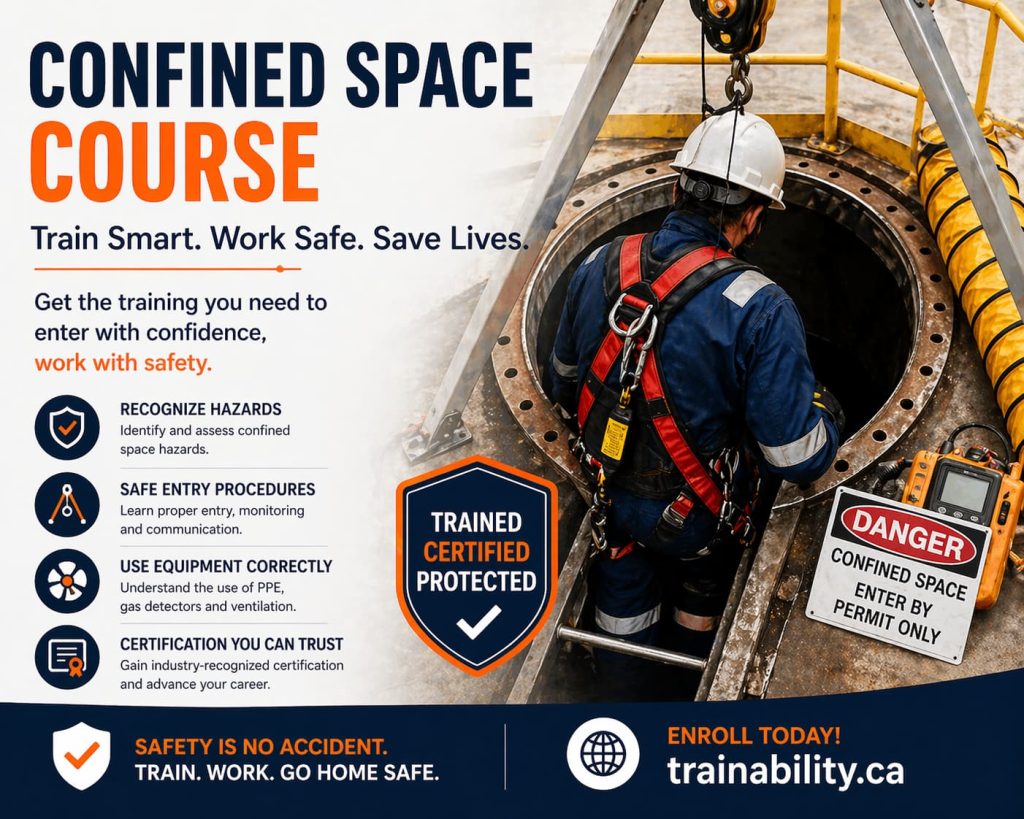
What is a Confined Space?
A confined space is a space that has a limited or restricted area, which is not intended for continuous human occupancy, that is completely or partially enclosed with limited access to and from the space.
Examples of confined spaces can include:
- Storage tanks
- Silos and hoppers
- Underground tunnels
- Sewers and pipelines
- Boilers and vaults
For example, maintenance workers may clean the inside of an industrial storage tank. In doing so, they may encounter toxic gases that are not visible but may become life-threatening unless there is proper ventilation or monitoring of the confined space.
Understanding the characteristics of confined spaces is essential, and receiving appropriate confined space training ensures they know how to recognise a confined space and to follow safety procedures before entering a confined space.
Common Risks in Confined Spaces
Confined spaces contain many hazards leading to serious injuries/death if left unchecked. Understanding these hazards helps workers prepare for potential hazards within their job responsibilities.
Some of the most common hazards associated with confined spaces are
- Oxygen deficiency: Low oxygen levels are possible due to limited airflow and can create difficulty breathing, which can lead to unconsciousness.
- Toxic Gas Exposure: Toxic gases like hydrogen sulphide and carbon monoxide can accumulate in a confined space without warning.
- Fire and Explosion Hazards: Flammable gases and dust ignite in a confined space.
- Restricted Movement: Small confined spaces make it difficult to escape quickly during emergencies.
- Poor visibility and lighting: Poor visibility increases the chance of slips, falls, and mishandling of machinery.
A real-life example involves sewer maintenance employees who experience exposure to toxic gases due to a lack of adequate monitoring equipment. It requires immediate evacuation/relocation, which results in significant delays & costs.
How Confined Space Courses Improve Safety and Prevent Accidents
The Structured Confined Space Course equips workers with the knowledge and practical skills needed to effectively manage the risks associated with working in confined spaces. The training includes topics such as prevention, safe entry procedures, and emergency response.
Hazard Identification and Risk Assessment
Before entering a confined space, workers must know how to identify potentially dangerous conditions, including evaluating ventilation systems, testing air quality, and recognising unsafe conditions.
Risk assessment methods enable employers to evaluate whether a confined space is safe to enter and to identify the precautions required before entry.
Use of Protective Equipment (PPE)
PPE plays an important part in the safe operation of confined spaces. Workers learn to use PPE for:
- Breathing devices (respirators)
- Safety harnesses and lifelines
- Gas monitors and detectors
- Protective clothing and gloves
By using PPE correctly, workers can lower their chances of being exposed to harmful materials while increasing their safety at work.
Emergency Procedures and Rescue Planning
In a confined space there must be a high priority for responding to an emergency, as you need to act fast. Workers can take a confined space class and learn how to properly react to emergencies, including assistance from emergency personnel.
Training includes:
- Evacuation techniques in an emergency
- communicate with emergency personnel
- properly use rescue equipment
- first responder to an emergency
With proper training you can respond to an emergency without putting yourself and others at risk.
Benefits of Confined Space Training
Investing in confined space training produces both a long-term safety benefit for workers and the overall success of the organisation.
Improved Worker Awareness and Confidence
Workers who understand safety procedures and protocols are more confident and competent when doing their jobs in confined spaces. Increased confidence typically reduces hesitation and increases the accuracy of tasks performed.
Compliance with Safety Regulations
Many businesses working in confined spaces are required to comply with occupational safety and health regulations. Training allows businesses to meet these regulations, not becoming subject to legal action.
Reduction in Workplace Incidents and Downtime
Adherence to safety procedures reduces workplace incidents. A reduction in incidents leads to reduced downtimes, fewer delays, and efficient operations.
For instance, companies that frequently conduct training usually do not have as many unplanned emergency shutdowns due to unsafe entry into confined spaces.
Choosing the Right Training Provider
Choosing a training provider can be an important decision because it affects both the future of your business and effective learning and industry compliance.
Certified and Experienced Instructors
Qualified instructors have insight into the industry and have both the experience in the industry and an understanding of hazards in the workplace, which helps to create practical solutions for improving safety.
Up-to-Date Safety Standards and Curriculum
Safety standards change frequently over time; therefore, it is imperative to identify companies that provide up-to-date training programmes that align with current safety regulations and standards of the industry.
For businesses seeking reliable safety solutions, professional training services are available at https://www.trainability.ca. Structured training modules, hands-on learning experiences, and certification programmes assist businesses designed to meet workplace safety standards. Partnering with experienced providers ensures workers receive comprehensive safety education and practical skills.
Conclusion
To ensure the safety of workers in confined spaces with no means of egress, a confined space course is critical. By providing training on how to identify hazards, gain access safely, and respond in emergencies, these types of training programmes are instrumental in minimising the risks associated with working in confined spaces.
Some of the long-term benefits of confined space training include compliance improvement, decreased incidents in the workplace, and increasing operational efficiencies. Investing in professional safety programmes provides an employer with a safer workplace and protects employees from hazards that could have been prevented. Taking proactive steps today ensures safer operations and long-term business success.
FAQs
Q1: What is a confined space course?
A confined space course is a safety programme designed to teach employees how to recognise hazards, follow safety procedures, and respond during emergencies within a confined space.
Q2: Who needs confined space training?
Typically, those who work in industries such as construction, maintenance, utility work, manufacturing, or oil and gas.
Q3: How often should training be renewed?
Training should be completed on a regular basis, usually every 1 to 3 years or whenever workplace conditions or safety regulations change.
Q4: What hazards are covered in the course?
Common hazards include oxygen deficiency, potential for exposure to toxic gases, risk of fire, limited movement, and lack of fresh air.
Q5: Is certification required?
Yes; depending on the business’s needs, certification may be required in order to meet safety standards and comply with industry regulations.

