
Fire safety is a critical, universal concern, as emergencies can happen anytime in schools, workplaces, and public spaces. Fire extinguisher training plays a vital role in providing individuals the knowledge necessary to take prompt and accurate actions during the initial stages of a fire.
The quickness of your response during a fire emergency often affects the extent of damage as well as the level of risk associated with the fire. Proper use of a fire extinguisher by a trained employee can control a small fire before it spreads. The components taught during the training focus on the proper use of the equipment. However, overall fire safety training is a broader concept that includes fire prevention, evacuation procedures and general emergency preparedness. Together, these training programmes build safer workplaces and communities.
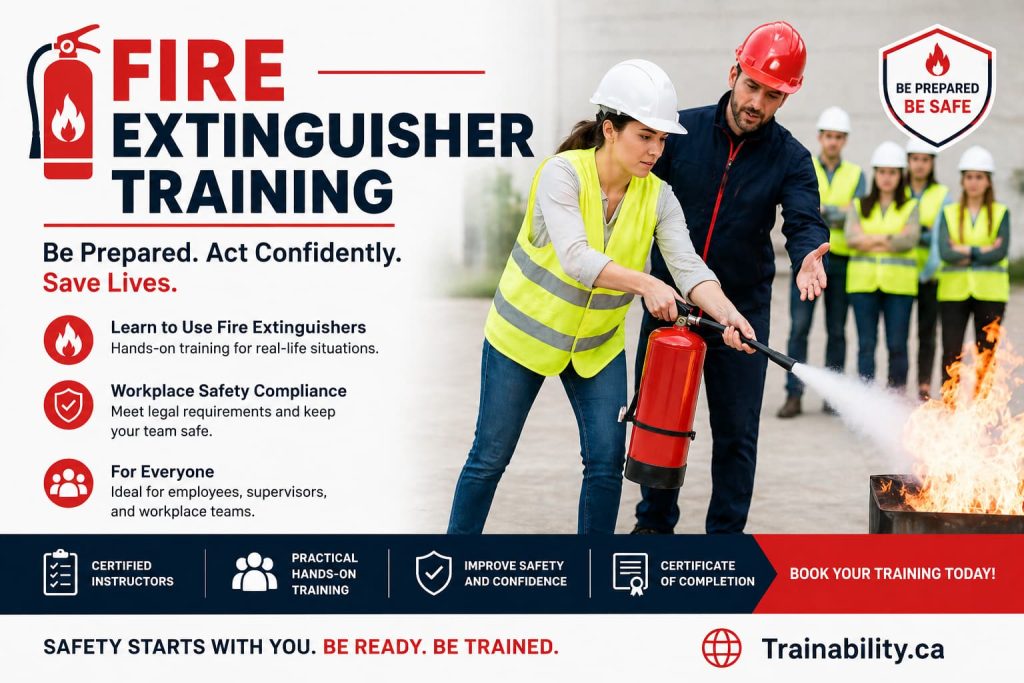
Trainability.ca site
What Is Fire Extinguisher Training?
Fire extinguisher training is a systematic safety programme designed to instruct individuals on the proper and safe operation of fire extinguishers during emergency situations.
The main objective of the training is to enable individuals to identify fire hazards, select the correct extinguisher, and apply the correct methods for preventing and controlling fires.
This training is essential for:
- Employees in business and commercial facilities
- Business owners responsible for safety and health in their workplace
- Industrial workers using machinery and handling hazardous materials
- Homeowners seeking to enhance the safety of their homes
With proper knowledge of how to use a fire extinguisher, individuals can prevent a fire from turning into a hazardous incident.
Why Fire Training Is Important
Quick Response During Emergencies
Fire extinguisher training offers the ability for workers to take action right away if they discover a fire. Early action is critical because small fires can spread rapidly if left unattended.
For example, an electrical fire ignites in the office and can be extinguished within minutes if an employee has the correct type of fire extinguisher and uses it promptly, preventing damage to equipment and disruption to the workflow due to an evacuation.
Reduces Fire Damage
When employees know how to use fire extinguishers properly, they can keep the flame from spreading. If they act quickly in doing so, trained employees can reduce costs incurred in the areas of property damage, machinery repair, and inventory losses.
This helps organisations avoid costly repairs and minimise downtime after incidents.
Protects Lives and Property
Fire emergency incidents are serious threats to human life. Fire extinguisher training ensures workers understand how to operate fire extinguishers safely and how to determine when it is appropriate to extinguish a fire versus evacuate.
Protecting employees and visitors remains the top priority during emergencies.
Builds Confidence in Emergency Situations
Training provides employees with greater assurance, whereas many individuals may panic or become anxious due to lack of experience. This training enhances decision-making capabilities and confidence in performing the proper emergency procedures during a fire incident.
Confident employees are more likely to respond effectively and support others during emergencies.
Types of Fire extinguisher Extinguishers You Should Know
To accomplish safe fire control, understanding of the fire extinguisher type is paramount and provides information for participants on the different types of fire extinguishers (Class A, B, C, D, and K) and what fires each type extinguishes.
A summary of classifications includes:
- Class A: Wood, paper, cloth, and ordinary combustibles
- Class B: Flammable liquids (gasoline, oil, etc.)
- Class C: Electrical equipment or wiring
- Class: D: Combustible metals
- Class K: Cooking oils and cooking fat (kitchen fires)
Knowing when and how to use these devices properly ensures a safe and effective fire response system.
Key Skills Learned in Fire Extinguisher Training
People learn practical skills that help them respond to fire emergencies.
PASS Technique (Pull, Aim, Squeeze, Sweep)
One of the most important techniques learned in fire extinguisher training is the PASS method. The PASS method involves:
- Pull: Remove the safety pin
- Aim: Point the nozzle at the base of the fire.
- Squeeze: Press the handle to release the extinguishing agent.
- Sweep: Move the nozzle side to side until the fire is out.
This method allows people to safely extinguish small fires.
Identifying Fire Types
Workers are taught to know the type of fire to choose the appropriate extinguisher. Using the wrong extinguisher could make the situation worse, especially during electrical or chemical fires.
Safety Precautions
Training also emphasises maintaining safe distances (3 feet), avoiding inhaling smoke, and ensuring a clear escape route while responding to a fire.
How Fire Safety Training Complements
how to use fire equipment, while fire safety training is about understanding the complete picture of fire prevention and getting ready for emergencies.
Key elements includes:
- Creating a plan for evacuating,
- Practicing regular fire drills,
- Recognising potential sources of fire hazards, and
- Following all workplace safety regulations.
When fire extinguisher training and fire safety training are combined, it ensures employees are fully prepared for fire emergencies and can follow established safety protocols.
Conclusion:
Fire extinguisher training is an essential part of workplace and personal safety. It equips individuals with the knowledge and confidence to respond quickly during fire emergencies, helping to prevent injuries, property damage, and potential loss of life. By understanding fire types and proper extinguisher use, anyone can take the first step toward creating a safer environment.

