
A working with heights course plays a crucial role in protecting workers who carry out their roles at height. Jobs involving ladders, scaffolding, roofs, and elevated platforms pose a significant risk to workers if proper safety procedures are not in place. Even simple tasks can become dangerous without the correct skill set.
The construction, maintenance, warehousing, telecommunications, and utilities industries are starting to see the growing need for Working at Heights Training. Employers are starting to recognise the importance of safety certifications, which assist in reducing the hazards and ensure compliance with safety regulations. In addition to protecting the worker, the right training will lead to a safer and more efficient method of performing the job.
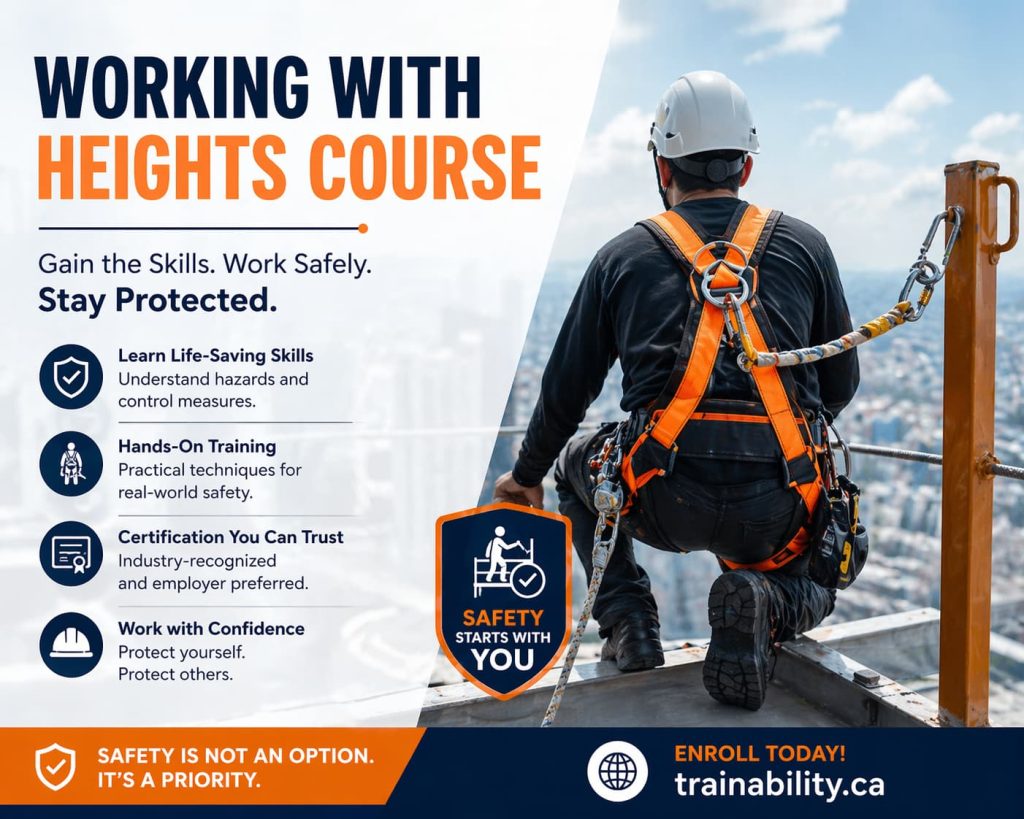
Importance of a Working With Heights Course
Working at heights is one of the main causes of workplace injuries worldwide, especially in companies where employees need to regularly work on elevated surfaces.
This course trains workers to identify hazards, follow safety procedures, and use safety equipment correctly. The course builds awareness of the risk level involved with working at heights and provides companies with structured guidance on how to minimise those risks.
Organisations that spend on working at heights training clearly demonstrate their commitment to workplace safety. When employees know the safety standards and procedures, they are less likely to make errors that can lead to accidents. As a result, there are fewer accidents, less downtime, and increased confidence amongst all workers.
Core Skills Taught in Working at Heights Training
The Working At Heights Training Course focuses on practical skills that workers use on the job every day in a real-life working environment. The objective of this training is to promote safety while maintaining control and awareness of your surroundings.
- Proper Use of Fall Protection Equipment
The most critical aspect of the Working With Heights course is the proper use of the fall protection equipment. Workers are trained on how to choose and use the right fall protection equipment based on the task requirements and level of risk.
Training will include;
- Identifying the different types of fall protection equipment,
- How to properly fit and wear a harness,
- Securing the equipment to approved anchors
- Inspecting the equipment before use
- Identifying damaged or unsafe equipment.
The development of these skills increases confidence in performing tasks at an elevated level and reduces the risk of falling.
- Hazard Identification and Risk Assessment
Recognising hazards is a foundational competency included in the Working with Heights training. Workers must evaluate their workplace before commencing with any task.
Some of the major focus areas of working on heights are:
- Identifying an unstable surface
- Identifying hazards in the environment, such as strong winds, wet or slippery surfaces
- Evaluating the safety risk in ladders and scaffolding
- Implementing controls to prevent injuries
By completing the above process, the workers develop a safer way to make decisions in high-risk work environments.
- Safe Ladder and Scaffold Usage
The improper use of ladders and scaffolding is a frequent cause of work-related accidents. The Working at Heights Course teaches workers how to access and move safely using the right techniques.
In this course, workers will learn:
- Correct angle and position to set a ladder up
- Correct way to climb safely
- Maximum loads placed on ladders and scaffolding
- How to keep ladders and scaffolding stable while in use
- How to inspect scaffolding before beginning work
Mastering these skills ensures workers do their jobs successfully and without compromising their safety.
Fall Arrest Systems
Fall arrest systems are an important aspect of training within working at heights training. They have been designed to protect workers from serious injury by safely stopping them from falling.
Through training, workers gain an understanding of how harnesses distribute weight on the body during a fall, as well as how anchor points support fall protection systems. Understanding these components assists workers in ensuring that they are installed correctly and used safely.
Topics addressed in the training will include:
- Different types of harnesses and their uses
- Selecting strong, reliable anchor points
- Connecting lanyards and lifelines properly
- Adjusting harnesses to provide security and comfort.
Correct Inspection and Usage Techniques
Regular inspection of fall arrest systems is necessary to maintain safety standards. Workers are trained to make visual checks for signs of wear & tear, damage to stitching, and malfunctioning connectors prior to each use of the fall protection system.
This ensures that all pieces of fall protection equipment work properly when needed.
Emergency Response Skills
Emergency Response Skills
Emergency response is another critical component of the Working with Heights course. Workers must be able to react quickly and correctly when an accident occurs.
Rescue Procedures at Heights
Training includes rescue planning and procedures for retrieving a fallen worker from an elevated surface. Workers learn methods for responding safely to a fallen worker without putting themselves or anyone else in jeopardy.
Topics covered include:
- Safe methods of evacuating a person in an emergency situation
- Safe methods of rescuing a person
- Using rescue equipment effectively
- Communicating with Emergency Response Teams
First Response in Case of Accidents
Workers are also taught first-response actions in case of an accident at work. Some of the things a worker learns should be the following:
- Simple first aid
- Keeping an injured person stable
- Reporting incidents immediately
- Following workplace emergency protocols
These skill learnings help you reduce severity and improve the chance of recovery.
Benefits of Working With Heights Course
When you complete a working with heights course, there are various benefits for your employees and employers, including safety improvements and operational improvements.
Reduces Workplace Accidents and Injuries
One of the biggest benefits of working at heights training is the reduction of workplace accidents. If workers understand the safety procedures, they are less likely to take dangerous risks or misuse equipment.
Fewer accidents create a safer environment on jobsites and a greater level of well-being for employees.
Improves Productivity and Worker Efficiency
Employees who receive proper training complete their assigned jobs faster, with fewer mistakes. Consequently, confidence provided by Working at Heights Training allows workers to concentrate on maximising their output without sacrificing safety.
Ensures Legal and Safety Compliance
Many regions have established certification requirements for workers performing tasks at heights. A working with heights course helps companies meet legal requirements and maintain industry standards.
The compliance eliminated legal risks associated with it and resulted in establishing a positive safety culture within the organisation.
Key Elements of Effective Working at Heights Training
Not all training is equally effective; therefore, it is important that training for working at heights is made up of essential features that allow for preparedness in the workplace.
Hands-On Practical Training Sessions
Effective safety training requires practical experience. Workers participate in supervised sessions that simulate real work conditions. This allows them to practise:
- The use of fall protection equipment
- Using ladders safely
- Reacting to simulated hazards
Hands-on training improves skill retention and confidence.
Conclusion
A Working at Heights course provides clients with a valuable asset in an unsafe working environment where employees perform tasks above ground level. It provides workers practical skills to use safely, increases confidence when using equipment, and reduces the risk of accidents happening. As the demand for safety compliance grows, working-at-heights training has become a significant requirement in many industries.
Organisations can create safer work environments by educating workers on hazards, training them on how to use safety equipment properly, providing appropriate emergency procedures, and offering continuous training. Ultimately, it contributes to increased productivity, lower risk, and success for the life of the operation.

