
Proper material handling is a crucial safety practice, especially in construction, manufacturing, and logistics. The improper handling of heavy loads, moving machinery, or performing work at heights significantly increases the chance of accident when not using proper safety controls.
Organisations are increasingly adopting advanced technology for lifting and hoisting. Common incidents (e.g., dropped load, equipment failure, and improper rigging) occur regularly and often lead to company shutdowns and financial loss. Overhead crane training provides the necessary skills for an employee to safely operate a crane, recognise possible hazards, and remain safe while performing lifting operations.
Additionally, overhead hoist training supports employees who handle hoists and lifting systems daily. Together, these training programmes can help minimise accidents and provide for safe and efficient material handling.
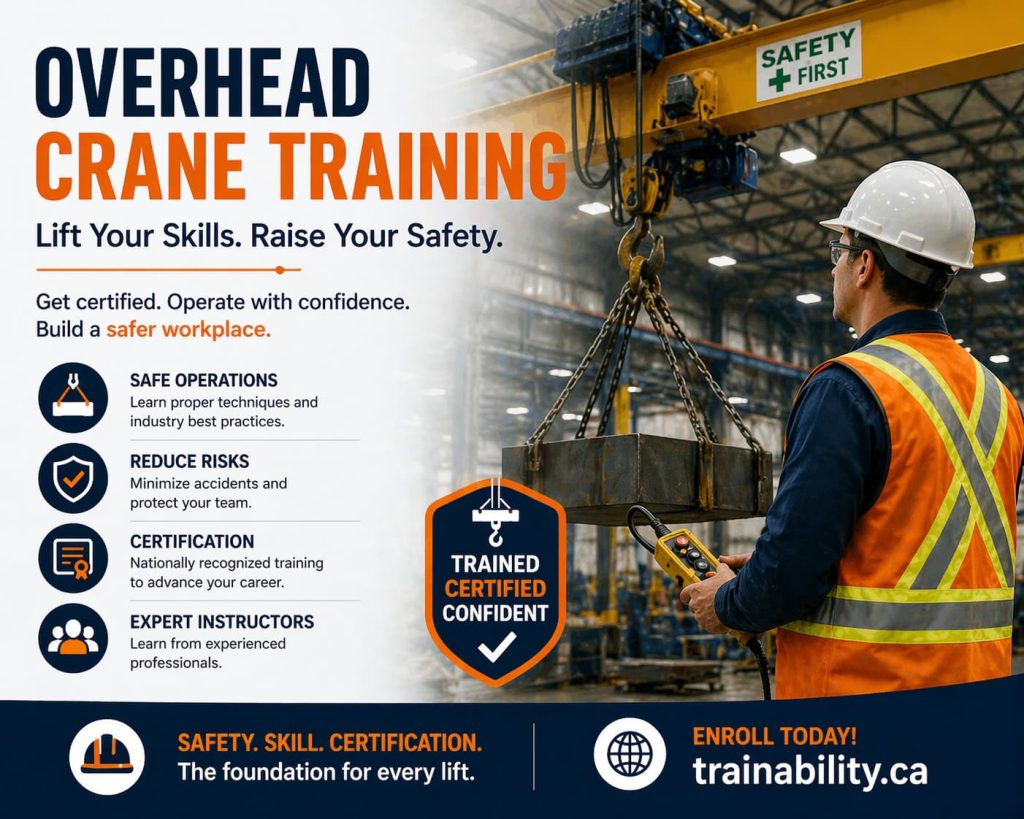
Understanding Overhead Crane Training Operations
Before trying to reduce risk levels, employees must understand how overhead cranes function. An overhead crane training session teaches operators how to identify, operate, and understand the functions of lifting equipment used in industrial settings.
Basic Functions of Overhead Cranes
Overhead cranes lift, move, and stabilise loads in the workspace. Operators learn how to safely operate/control the lifting, lowering, and travelling of loads. Understanding load limits and balance is critical to prevent tipping or sudden drops.
In many manufacturing plants, overhead cranes lift steel beams across production lines. If loads are unbalanced, even a minor shift can cause hazardous swinging.
Common Types of Cranes Used in Industries
There are many different types of cranes available for use in different industries, as follows:
- Bridge cranes for heavy industrial lifting applications.
- Gantry cranes for outdoor material handling applications.
- Jib cranes for smaller workspaces.
- Monorail cranes for repetitive lifting.
The key part of overhead crane training is learning how each crane operates. This allows employees to adapt to their different work environments.
Where Overhead Hoist Training Fits In
Overhead hoist training focuses on using hoisting equipment to lift loads vertically. Part of this training is learning to inspect hoists and maintain lifting chains as well as safely handling suspended loads while using hoist equipment.
Common Risks in Material Handling
Many hazards come along with material handling operations, resulting in severe incidents within a workplace. The need for proper training highlights the importance of recognising these hazards.
Equipment Failure and Load Drops
Damaged cables, defective brakes, and compromised hooks can cause a load to drop. These can lead to damaged materials and pose a risk to workers standing close by.
For example, in warehouse settings, failure to inspect lifting chains before use has led to falling loads that halted operations for hours.
Human Error and Lack of Training
Human error creates the majority of crane accidents. Miscommunication among workers, incorrectly positioned loads, and improper signals can all result in dangerous, unsafe situations.
Without proper training, operators often fail to inspect equipment, perform unauthorised lifts, and ignore warning signs, resulting in accidents, injuries, and fatalities.
Workplace Injuries and Financial Losses
When a crane accident injures an employee, the incident immediately triggers not only medical costs but may also require compensation and equipment repair. All of these costs impact the company’s operation and productivity.
How Overhead Crane Training Reduces Risks
Overhead crane training with structure helps eliminate workplace hazards and increase operational safety.
Proper Load Handling Techniques
Operators learn how to:
- Calculate the safe working load.
- Properly secure a load
- Keep a load in balance.
- Avoid abrupt movements, such as jerks.
Using these methods helps decrease the chances of dropping an object and damaging equipment.
Improved Operator Awareness and Control
Training enhances awareness by educating the operator on how to be aware of their surroundings, communicate with others on the same lifting task, and maintain necessary separation while lifting items.
Improved awareness helps avoid collisions and reduce hazards in busy working environments.
Emergency Response and Hazard Identification
Recognising warning signs prior to accidents is another important part of overhead crane operator training. Employees learn to be able to act quickly in an emergency, such as electrical failure or equipment malfunction.
Benefits of Overhead Hoist Training
Overhead hoist training ensures better safety and greater efficiency within the facility and workplace.
The key benefits of this training are as follows:
- Better load control and handling accuracy.
- Less wear and tear on the equipment.
- Faster response time to equipment issues.
- Increased worker confidence during operations
- Safer handling of large items.
For instance, companies implementing this overhead hoist training have significantly reduced maintenance problems, as operators are now empowered to perform accurate daily inspections.
Key Components of Effective Training Programs
There is a vast diversity in safety results from various training programmes. To achieve overhead crane training that meets the criteria for safe operation, it is necessary to provide both theoretical and practical training.
Practical Hands-On Training
Hands-on learning is essential for skill development. Workers practise real lifting tasks under supervision, which helps them gain confidence and improve accuracy.
Training sessions typically include the following:
- Equipment inspection drills
- Simulated load positioning drills
- Emergency scenario practice
- Safe communications drills
These practical experiences assist workers in preparing for the challenges in their daily job duties.
Choosing the Right Training Provider
Choosing an appropriate training provider is important for developing safe work practices.
Importance of Certified Trainers
Certified trainers are qualified instructors who provide knowledge of the industry as well as safety expertise as part of the training process. They ensure workers understand current safety standards and operational requirements.
Companies should work with reputable educational providers and use training programs that provide certificates of successful completion, along with a significant level of hands-on experience.
If you are a business seeking an authorised and reliable training programme, you can visit https://www.trainability.ca for specialised overhead crane training and overhead hoist training programmes conforming to industry safety regulations. The focus of their programmes on practical learning, compliance, and risk reduction helps organisations build safer workplaces.
Conclusion
Overhead crane training can help eliminate dangers from using cranes in material handling environments. In addition to understanding equipment operations, trained individuals will be able to react appropriately if situations arise where an overhead crane is present.
Combining structured overhead crane training with hands-on experience allows businesses to reduce accidents, increase productivity, and minimise costly downtime. By partnering with a trusted provider of trainability, companies that invest in overhead crane training ensure workers are qualified and compliant with safety requirements.

