
Designed for elevated work environments, the Working at Heights Safety Training Course empowers employees to perform tasks securely and confidently. Daily fall hazards on rooftops, ladders, scaffolds, and platforms are a serious risk. Preventative safety training significantly reduces accidents by teaching employees how to identify hazards, use PPE correctly, and follow safe work practices.
The Comprehensive Working at Heights Safety Training Course provides employees across various industries, including construction and warehousing, with the essential skills required to identify hazards, effectively utilise PPE, and ensure regulatory compliance.
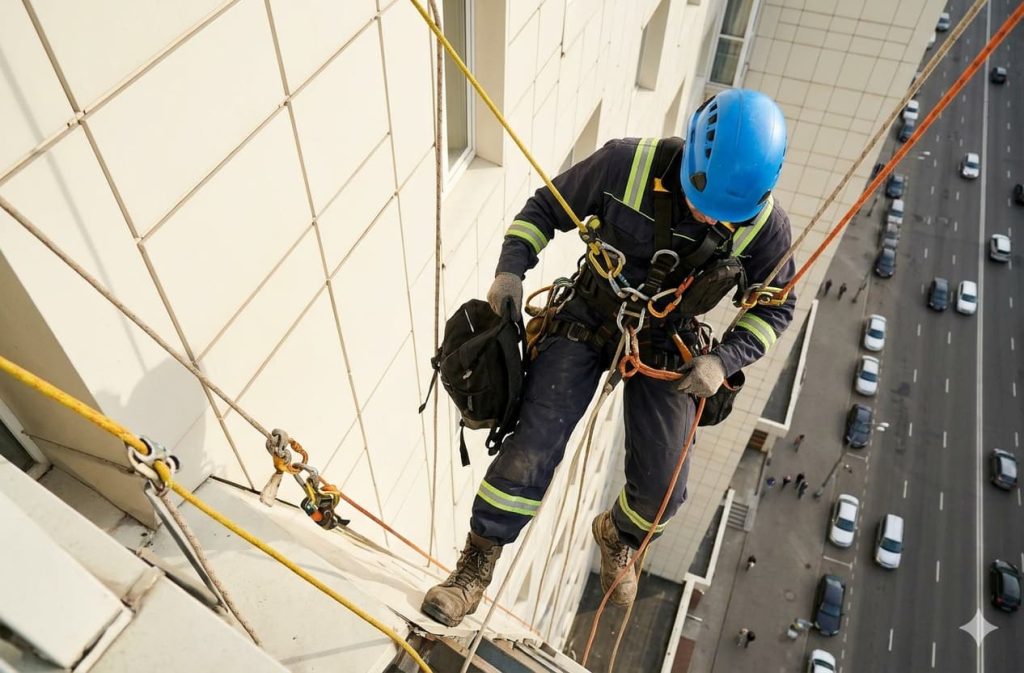
What Is a Working at Heights Safety Training Course?
Working at Heights Safety Training is a specialised safety programme that equips employees with the skills to prevent falls. Participants learn to identify hazards, utilise fall protection systems, and implement safe work practices.
This type of training includes both classroom instruction and hands on training to help workers learn to work safely from an elevated position. Most programmes are designed to meet industry and government safety requirements.
During the course, workers learn about:
- Techniques for fall prevention
- Identifying hazards
- Safely using a fall arrest system
- The process for rescues in an emergency
- Inspecting and maintaining equipment
After successfully completing this course, they receive a certification that proves the worker has completed approved Fall protection training and understands safe work practices.
It is common for industries where employers also require valid working at heights certification before allowing workers on construction or industrial job sites.
Why Is Working at Heights Training Important?
A working at heights safety training course is crucial to prevent falls, which are one of the most significant causes of workplace injuries and fatalities. Without proper safety training, employees performing tasks at elevated levels, such as on ladders, scaffolding, or roofs, face critical dangers.
Falls protection training instructs employees on how to recognise hazards, use fall protection equipment properly, and follow safe work procedures. It also teaches employees how to prevent accidents by recognising hazardous conditions (e.g., unstable surfaces, unguarded edges, broken equipment).
This type of workplace safety training also helps employers comply with safety regulations and reduce workplace incidents. The proper training lowers the chances of injuries, incurring penalties under occupational health and safety legislation, experiencing delays in projects, and submitting compensation claims.
Completing a safety certification course further provides the employee with the confidence to respond safely in an emergency. Additionally, many employers require valid working at heights certification before they allow workers to work on construction or industrial sites.
What Topics Are Covered in the Course?
The professional Working at Heights Safety Training Course provides several key safety topics meant to train workers on the hazards involved when working in elevated spaces.
Fall Hazard Awareness
Workers are trained on how to identify fall hazard situations such as unguarded edges, open roofs, unstable ladders, slippery walking surfaces, and poorly constructed scaffolding systems. Workers also learn how to evaluate if working at height poses an acceptable risk before starting the job.
Fall Protection Equipment
In addition, participants of the course learn how to properly use and inspect fall protection equipment, which includes:
- Safety harnesses
- Lifelines (lanyards)
- Anchors
- Guardrails
- Fall arrest systems
Hands on training helps workers understand equipment limitations and proper fitting procedures.
Safe Work Procedures
Workers are educated on the safe ways of accessing elevated areas, maintaining balance, securing equipment, and following approved worksite safety procedures. Participants also learn proper communication methods and practices, as well as the importance of teamwork.
Emergency Response Procedures
Lastly, participants receive training on how to respond in an emergency situation in case of a fall, equipment failure, or workplace accident. Participants also learn about rescue procedures, incident reporting procedures, and emergency communications procedures.
Who Needs Working at Heights Certification?
Workers who perform tasks above ground level or near fall hazards require a valid working at heights certification. This includes professionals such as:
- Construction
- Roofers
- Electricians
- Window Cleaners
- Warehouse workers
- Maintenance Technician
- Scaffolders
- Industrial Contractors
A supervisor or site manager could also take advantage of a certified safety certification course to learn about their worker safety responsibilities.
Benefits of Taking a Certified Safety Training Course
There are several benefits after completing an accredited Working at Heights safety training course.
Improved Workplace Safety
This course provides workers with the necessary information to avoid having an accidental fall while performing their daily activities.
Legal Compliance
Accredited training helps employers to be compliant with the necessary occupational safety regulations and industry standards.
Increased Job Opportunities
Many employers would rather hire employees who already possess a working at heights certification.
Reduced Workplace Costs
Fewer accidents translate to lower medical costs, reduced workers’ compensation claims, and fewer project delays.
Greater Worker Confidence
Completing professional fall protection training can improve worker confidence when they have to climb to elevated work sites.
How Long Does Working at Heights Certification Last?
The validity period for working at heights certification depends on local regulations and training provider requirements. In most regions, you must complete refresher training every three years to maintain your certification.
Workers should renew certification before expiration to maintain compliance and ensure their safety knowledge remains up to date.
How to Register for a Working at Heights Safety Training Course
Registering for a Working at Heights Safety Training Course is usually a simple process. Most approved trainers provide scheduling options, including weekdays, weekends, and group classes.
Typically, to register, participants need to:
- Choose an approved training provider.
- Select a date for your course.
- Complete the registration paperwork.
- Submit payment
- Attend classroom and practical sessions
Some approved trainers offer blended learning that includes both online theory instruction and hands on practical assessments.
Conclusion
A Working at Heights Safety Training Course is essential for protecting workers who perform tasks in elevated environments. The course teaches employees how to recognise hazards, use fall protection devices correctly, follow safe work procedures, and respond to emergencies.
Completing certified workplace safety training through an accredited instructor ensures you improve your safety awareness, while employers benefit from safer job sites and better regulatory compliance. The investment in workplace safety through proper fall protection training is beneficial at any time, whether it is a new job or an employee renewing their certification.
FAQs
The Working at Heights Safety Training Course teaches workers how to safely perform elevated tasks, significantly reducing the risk of accidental falls.
Many industries and jurisdictions require workers to complete certification before workers are exposed to fall hazards.
Working at heights safety training certificates are typically valid for several years before refresher training is required.
Many providers offer a combination of online theory training and on-the-job training through in person practical assessments.
Harnesses, lifelines, lanyards, anchor points, guardrails, and fall arrest systems.
Training courses can vary significantly based on the training provider, course format, and included practical training sessions.

